
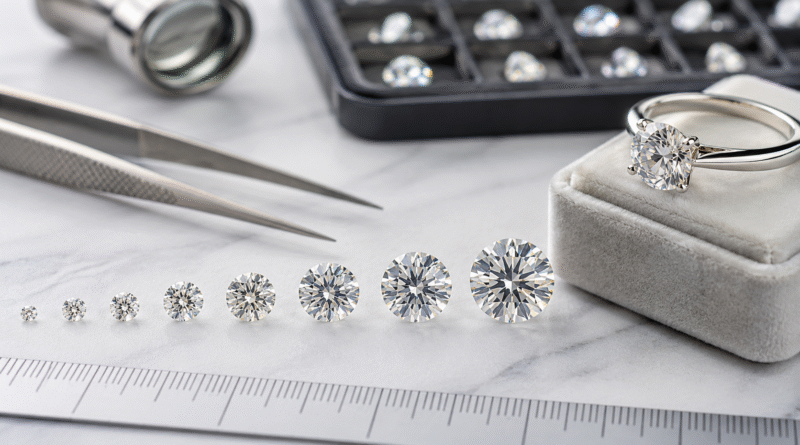
Diamond Size Chart Explained: How an MM to Carat Chart Helps You Choose the Perfect Diamond
Buying a diamond is exciting, but it can also feel confusing when you encounter terms like carat, millimeters, and diamond measurements. Many buyers assume that a higher carat automatically means a larger-looking diamond, but that’s not always true. A diamond’s visible size depends on several factors, including its cut quality, shape, and actual dimensions. That’s why using a mm to carat chart is one of the smartest ways to understand how diamonds compare before making a purchase.
Whether you’re shopping for an engagement ring, anniversary gift, or custom jewelry, understanding diamond measurements helps you make informed decisions and avoid common buying mistakes. Resources like the diamond size chart available on mybirthstone.org make it easier to compare different diamond sizes accurately while visualizing how each option appears in real life.
Why Diamond Measurements Matter
Carat is the standard unit used to measure a diamond’s weight rather than its physical size. One carat equals 200 milligrams, but two diamonds with the same weight may look noticeably different because of variations in cut proportions.
This is why experienced jewelers recommend looking beyond the carat number. The actual diameter measured in millimeters often provides a better understanding of how large a diamond will appear once set in jewelry.
For example:
- A well-cut 1-carat round diamond typically measures around 6.4–6.5 mm.
- A poorly cut 1-carat diamond may appear smaller because more weight is hidden in its depth.
- Different diamond shapes also display their weight differently.
Understanding these relationships allows buyers to focus on appearance rather than weight alone.
What Is an MM to Carat Chart?
An mm to carat chart compares a diamond’s diameter or dimensions with its approximate carat weight. Instead of guessing how large a diamond will look, buyers can quickly estimate the expected size using measurement data.
Although every diamond is unique, these charts provide reliable averages based on ideal cutting proportions. They are especially useful when:
- Comparing loose diamonds
- Shopping online
- Designing custom jewelry
- Evaluating second-hand diamonds
- Matching side stones
Instead of relying only on product descriptions, buyers gain a visual understanding of each diamond’s size.
Understanding the Difference Between Carat and Size
Many first-time buyers believe that increasing carat always creates a dramatic increase in visible size. In reality, the relationship is much more gradual.
For example:
- 0.50 ct ≈ 5.1 mm
- 0.75 ct ≈ 5.8 mm
- 1.00 ct ≈ 6.5 mm
- 1.50 ct ≈ 7.4 mm
- 2.00 ct ≈ 8.2 mm
Notice that doubling the weight from one to two carats does not double the diameter. Instead, the visible increase is only around 1.7 mm.
Understanding this helps buyers decide whether paying significantly more for a larger carat weight is worthwhile.
How Diamond Shape Affects Size
Not all diamond shapes distribute weight equally.
Round brilliant diamonds generally serve as the industry standard for measurement charts, but fancy shapes often appear larger or smaller despite having identical carat weights.
Oval diamonds often look larger because of their elongated shape.
Marquise diamonds maximize finger coverage and create the illusion of greater size.
Pear-shaped diamonds also appear longer than round diamonds.
Emerald cuts emphasize clean lines and large table facets.
Princess cuts usually appear slightly smaller because more weight is concentrated below the surface.
Cushion cuts can vary considerably depending on cutting style.
Because each shape behaves differently, using a professional diamond size chart helps buyers compare shapes more accurately before purchasing.
Why Cut Quality Changes Appearance
Cut quality is one of the biggest factors influencing a diamond’s visual size.
An ideally cut diamond reflects light efficiently while maintaining attractive proportions. Poorly cut diamonds may carry unnecessary weight in their depth, making them look smaller despite identical carat weights.
This means two diamonds labeled as one carat may appear noticeably different when viewed side by side.
A quality size chart works best when paired with an understanding of cut grades and proportions.
Choosing the Right Diamond for Your Budget
One of the biggest advantages of using measurement charts is finding diamonds that maximize appearance without dramatically increasing price.
Many buyers intentionally purchase diamonds slightly below popular weight thresholds.
For example:
- 0.90 ct instead of 1.00 ct
- 1.40 ct instead of 1.50 ct
- 1.90 ct instead of 2.00 ct
These diamonds often appear nearly identical in size while costing substantially less.
Using measurement comparisons helps shoppers identify these excellent value opportunities.
Online Diamond Shopping Becomes Easier
Buying diamonds online has become increasingly popular, but shoppers cannot physically inspect every stone.
Measurement charts provide valuable confidence by helping buyers compare listings objectively.
When viewing online specifications, buyers can verify:
- Diameter
- Length
- Width
- Depth
- Carat weight
- Shape proportions
This reduces uncertainty and helps identify diamonds that offer the best visual value.
Comparing Diamonds Side by Side
Imagine choosing between these two diamonds:
Diamond A:
- 1.00 ct
- 6.2 mm diameter
Diamond B:
- 0.92 ct
- 6.3 mm diameter
Although Diamond A weighs more, Diamond B actually appears slightly larger because of its better proportions.
Without measurement data, many buyers would automatically select the higher carat option.
This example demonstrates why experienced shoppers compare dimensions alongside weight.
Perfect for Engagement Ring Shopping
Engagement rings remain the most common reason people research diamond sizes.
Couples often want the largest beautiful diamond possible within a specific budget.
Instead of chasing carat numbers alone, understanding measurements helps create better purchasing decisions.
A well-cut 0.90-carat diamond may look nearly identical to a one-carat stone while saving hundreds or even thousands of dollars.
The savings can then be invested in:
- Better clarity
- Higher color grade
- Premium setting
- Wedding bands
This balanced approach usually produces a more attractive final ring.
Helpful for Custom Jewelry Design
Custom jewelers frequently rely on millimeter measurements rather than carat weight.
When creating:
- Halo rings
- Three-stone rings
- Earrings
- Tennis bracelets
- Pendants
Precise dimensions ensure that every stone fits perfectly into its intended setting.
Using a reliable mm to carat chart helps customers communicate clearly with designers throughout the customization process.
Why MyBirthstone.org Is a Valuable Resource
Understanding diamond measurements becomes much easier when reliable educational resources are available.
The comprehensive diamond size chart from MyBirthstone.org offers practical guidance for comparing diamond dimensions, carat weights, and visual appearance. Rather than relying on estimates, buyers can use professionally organized reference information to make more confident purchasing decisions.
Whether someone is buying their first diamond or upgrading an existing piece of jewelry, the chart provides an easy-to-understand reference that simplifies the entire shopping experience.
Common Mistakes Buyers Should Avoid
Many buyers make avoidable errors during the purchasing process.
Some of the most common include:
Ignoring millimeter measurements.
Assuming larger carat always means larger appearance.
Comparing only price.
Overlooking cut quality.
Choosing weight over beauty.
Not researching diamond proportions.
Avoiding these mistakes often leads to a more satisfying purchase and better long-term value.
Tips for Using a Diamond Size Chart Effectively
To get the most from a size chart:
Compare both carat weight and millimeter measurements.
Review the diamond’s cut grade.
Consider the shape’s visual appearance.
Stay within your budget.
Focus on overall beauty instead of carat alone.
Use trusted educational resources when comparing stones.
These simple practices help buyers make informed decisions with greater confidence.
Frequently Asked Questions
What does an mm to carat chart show?
It compares a diamond’s millimeter dimensions with its approximate carat weight, allowing buyers to estimate how large a diamond will appear.
Why can two diamonds with the same carat look different?
Differences in cut quality, depth, proportions, and shape can make similarly weighted diamonds appear larger or smaller.
Is carat the same as diamond size?
No. Carat measures weight, while size refers to the diamond’s visible dimensions.
Which diamond shape appears the largest?
Oval, marquise, and pear-shaped diamonds generally appear larger than round diamonds of the same carat weight because of their elongated proportions.
Should I rely only on carat weight when buying a diamond?
No. Always compare millimeter measurements, cut quality, proportions, shape, and overall appearance to make the best buying decision.
Final Thoughts
Buying a diamond becomes much easier when you understand the relationship between carat weight and physical dimensions. Instead of focusing solely on weight, using a reliable mm to carat chart allows you to compare diamonds based on how they actually look. This approach helps maximize beauty, improve value, and reduce costly purchasing mistakes. For anyone researching engagement rings, loose diamonds, or custom jewelry, the comprehensive diamond size chart available on MyBirthstone.org serves as an excellent educational resource. It simplifies complex measurement data into practical information, helping buyers confidently select the diamond that best matches their style, expectations, and budget.