
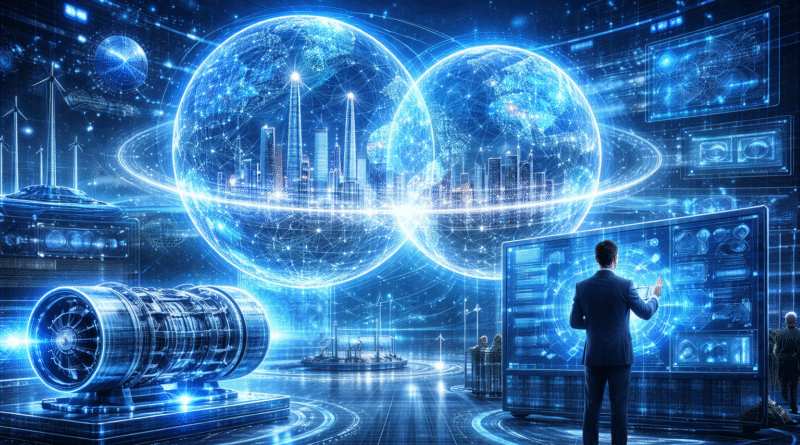
Digital Twin Technology: How Virtual Replicas Are Transforming Industries
Introduction
Digital twin technology is rapidly changing how businesses design, monitor, and optimize real-world systems. By creating a virtual replica of physical assets, processes, or systems, organizations can analyze performance, predict issues, and improve decision-making in real time.
From manufacturing and healthcare to smart cities and aerospace, digital twin technology is becoming a core part of modern innovation. In this article, we’ll explore what digital twin technology is, how it works, its benefits, real-world applications, challenges, and why it plays a crucial role in the future of technology.
What Is Digital Twin Technology?
Digital twin technology refers to the creation of a virtual model that accurately represents a physical object, system, or process. This digital replica is continuously updated using real-time data collected from sensors, IoT devices, and software systems.
The goal is to simulate, analyze, and optimize the performance of physical assets without interfering with real-world operations.
How Digital Twin Technology Works
Digital twin technology relies on several interconnected components:
Core Elements of a Digital Twin
- Physical asset: The real-world object or system
- Sensors & IoT devices: Collect live data
- Data processing systems: Analyze incoming information
- Digital model: Virtual representation of the physical asset
The digital twin mirrors real-world conditions, allowing organizations to test scenarios, predict failures, and improve efficiency.
Types of Digital Twins
Digital twin technology is commonly divided into different types based on use cases.
1. Product Digital Twins
Used during product design and development to simulate performance before manufacturing.
2. Process Digital Twins
Focus on optimizing workflows, production lines, and business operations.
3. System Digital Twins
Represent complex systems such as factories, transportation networks, or smart cities.
Benefits of Digital Twin Technology
Digital twin technology offers multiple advantages across industries.
Improved Decision-Making
By analyzing real-time data, organizations can make informed decisions based on accurate simulations.
Predictive Maintenance
Digital twins help detect potential failures early, reducing downtime and maintenance costs.
Cost Reduction
Virtual testing eliminates the need for expensive physical prototypes.
Enhanced Performance Optimization
Continuous monitoring allows systems to be fine-tuned for maximum efficiency.
Digital Twin Technology vs Traditional Simulation
| Data Source | Real-time data | Static data |
| Accuracy | High | Moderate |
| Adaptability | Continuous updates | Fixed models |
| Use Case | Live system monitoring | One-time testing |
This comparison highlights why digital twin technology is more powerful and dynamic than traditional simulations.
Real-World Applications of Digital Twin Technology
Digital twin technology is already transforming multiple sectors.
Manufacturing
Factories use digital twins to:
- Optimize production lines
- Reduce equipment failure
- Improve product quality
Healthcare
Hospitals use digital twins to model:
- Patient treatment plans
- Medical device performance
- Hospital operations
Smart Cities
Digital twin technology helps city planners manage:
- Traffic flow
- Energy consumption
- Infrastructure maintenance
Aerospace and Automotive
Companies simulate engines, vehicles, and aircraft systems to improve safety and performance.
Challenges of Digital Twin Technology
Despite its advantages, digital twin technology faces some challenges.
Data Security and Privacy
Handling large volumes of real-time data increases cybersecurity risks.
High Implementation Costs
Building accurate digital twins requires advanced infrastructure and expertise.
Data Integration Issues
Combining data from multiple systems can be complex.
Future of Digital Twin Technology
The future of digital twin technology looks promising as advancements in:
- Artificial intelligence
- Machine learning
- Cloud computing
- Internet of Things (IoT)
These technologies will make digital twins more accurate, scalable, and accessible across industries.
Why Digital Twin Technology Matters
Digital twin technology enables organizations to:
- Reduce risk
- Increase efficiency
- Improve sustainability
- Drive innovation
It bridges the gap between the physical and digital worlds, offering unprecedented insight into complex systems.
Final Thoughts
Digital twin technology is no longer a futuristic concept—it’s a practical solution reshaping industries today. By providing real-time insights and predictive capabilities, it allows businesses to operate smarter, faster, and more efficiently.